Wednesday, August 8, 2012

The Deep Blue Sea (2011) - Directed by Terence Davies


Terence Davies’ first non-documentary work since House of Mirth (2000) is a spare and emotionally fragile work that contains magnificent pacing, inspired visuals, and a devastating performance from Rachel Weisz who is in nearly every scene in the film and commands your attention the entire way. It’s one of the best films of 2011 (or 2012 depending on release dates and locations). Davies here works within a framework of the classic melodramas and in a certain sense, I was reminded of Lean's Brief Encounter (1945) except that this story somewhat picks up where Brief Encounter leaves off. Here, the female protagonist pursues and consummates the affair and is left to deal with the consequences. This is a film that may bore or exasperate some, but for fans of love stories or melodramas, it doesn’t get better than this.


The Deep Blue Sea is based on the Terence Rattigan play from 1952 of the same name. It is the story of Hester Collyer (Weisz), wife of a Judge named William (Simon Russell Beale). They live a rather privileged existence, yet have no children. We pick up the story after Hester has been involved in an affair with an RAF pilot named Freddie (Tom Hiddleston), and in fact, the story basically occurs in one day----the day Hester has decided to commit suicide. Freddie had forgotten her birthday and had gone away for the weekend and in a state of despondency, Hester attempted to kill herself. She is saved by her neighbors, but spends the rest of the day remembering moments from her past. This is told in a mosaic flashback form. We see moments with her husband, we see moments with Freddie. We slowly begin to put things together. Later that day, Freddie comes home to find her in a state of disengagement and finds her suicide note. The rest of the film involves Hester attempting to reconcile her feelings and her relationships.


What I find so thoroughly engaging about this film, is its mature and its deeply introspective approach to the subject matter. As the audience we are trusted to find our way through Hester’s feelings. Yes it is obvious that she is distraught and depressed. But why? As the film unfolds, it is clear that this is a work of great character examination. It appears that Hester married for safety and comfort, but when she met Freddie, she found sexual and emotional exhilaration. When she left her husband for her lover, she found herself torn between guilt and passion…between shame and love. This produced in her a deep rooted sense of self-loathing and self-hatred, so that she remained balanced on the precipice of an emotional abyss. She gets along, but if there is any negative emotional setbacks in her relationship, she takes it extremely hard. What is so fascinating is that Hester does not avoid emotional drama. She is almost drawn to it as a way of feeling SOMETHING. When Freddie picks up her suicide note, she does not try to tear it away from him. She wants him to read it. She wants him to know her pain and wants to be put in that emotional state of turmoil and bring him into it. She also turns away her husband even though he seems to still care for her and is willing to take her back to comfort and safety. She denies him and instead prefers to stay in her perpetual state of melancholy, depression, and suicidal fantasies. Like I said though, this film is deeply introspective, and outside of a few outbursts, is a rather quiet, but penetrating work.


Camerawork by Florian Hoffmeister allows a hazy glow to overtake the viewer. The film is filtered so that nothing is quite in extreme focus and we are awash in cigarette smoke and dark rooms and shadows. Davies lets us wallow in the mise-en-scene and the pace is very slow and deliberate, which allows a sense of importance to set in even though the film is only 98 minutes. Punctuating the film with feeling is a violin concerto piece by Samuel Barber, which gives the film a sense of beautiful desperation. It’s a wonderful piece of music. Foremost, though, is the performance by Rachel Weisz. She makes us believe that this woman is willing to be absolutely miserable, perhaps even crave her turmoil, all for the sake of love. Yes she’s in love…..and it’s killing her. Weisz is tremendous in moments of emotional outpouring, and also in moments of pensive reservation. There is an extended scene where she stands at her window, smoking a cigarette. You can feel her desperate need to be lost in her own mind. Weisz does not turn this into a pity party. We don’t feel sorry for her but instead regard her with fascination. How far will this woman go to be continually humiliated and destroyed? This film intensely examines the depth of her emotional state. It is a fantastic work.


Wednesday, August 1, 2012

Boudu Saved From Drowning (1932) - Directed by Jean Renoir


If this isn’t one of the greatest comedies ever made I would be hardpressed to find a reason why it wouldn’t be considered as such. Jean Renoir’s film is chock full of delightful comedy and social commentary that is quintessentially French and also rather influential to other comedies that followed in the decades after. One could probably name several comedies where most of the action revolves around a character who is essentially a fish out of water that becomes rather annoying to others around him/her. Everything from What About Bob? (1991), to National Lampoon’s Christmas Vacation (1989), to buddy comedies like Planes, Trains, and Automobiles (1987). There are more for sure. Here though, there is a beautiful assimilation between flat-out comedy and social commentary and they build upon each other nicely. I am usually not the biggest Jean Renoir fan, but this is one of my favorite films by him. 


Boudu (Michel Simon) is a homeless man. We find him at the beginning of the film in a park with his dog, which he promptly loses. This dog was seemingly his only comfort in life. We also meet a married couple, Mr. and Mrs. Lestingois, and their maid Anne-Marie (also Mr. Lestingois’s mistress). One day, Mr. Lestingois spots a homeless man (Boudu) jumping into the Seine to kill himself. Lestingois rushes from his home and saves him from the river, bringing him back to his house. He not only saves Boudu’s life, but invites him to stay with them. He gives him food, clothes and a couch to sleep on. Boudu is rather carefree about the whole deal…being clumsy and making messes, eating sloppily, flirting with the maid, having sex with the Mrs., and generally wreaking all kinds of havoc on the bourgeois household. It’s a riotous combination of slapstick and class commentary.


Michel Simon gives a towering performance as Boudu, one of the great cinematic characters of the 1930’s. His sloppy speech, mindless food chewing, and altogether uncouth qualities are quite a behold to watch. One of my favorite  sequences is when Mr. Lestingois tells him to go out to a barber to get his beard cut….but he must shine his shoes first. So Boudu begins to shine his shoes, and manages to flood the kitchen with water, leaving polish everywhere from the kitchen to the bedroom with not a care in the world (I include this clip below from YouTube). Boudu is a rather boorish character but is not really mean spirited. He's just completely unfiltered. Thus, he’s funny in a truly genuine, instinctive kind of way. He simply says what he thinks and does what he wants. Michel Simon also works from a cinematic language and framework that began with the silent clowns (Chaplin, Keaton), which gives his performance a wonderful visual flair, but he makes it his own, adding more raw body movements and expressions than we are used to seeing from this era, rather than the graceful balletic movements of Keaton and Chaplin.


Of course, the attack on the bourgeoisie is apparent here and Renoir does not shy away from the satirical angle. Boudu asks a cop for help in looking for his dog and isn’t given the time of day. When a beautiful (rich) woman approaches the cop for the same reason, he brings in several other cops for help. As Boudu opens a door for a man with a fancy car in the park hoping to get some change, the man has nothing in his pockets to give to Boudu, so Boudu hands him 5 Francs. Furthermore, all anyone can talk about when Boudu is saved from drowning is how Lestingois is going to get recognized for such a feat. Throughout the film, there is a subversion of the bourgeois life. Perhaps the greatest moment is at the end of the film when Boudu trades his new expensive clothing and changes clothes with a scarecrow at the edge of a field. He’s clearly fed up with his newfound life and would rather go back to being poor. Jean Renoir commands the whole film masterfully from start to finish and with Michel Simon’s towering performance, this is a must-see comedy…. with bite to it.

Wednesday, July 25, 2012

Only Angels Have Wings (1939) - Directed by Howard Hawks


Howard Hawks’s films always seem to have a way of making me feel at home when watching them. He was often able to capture a camaraderie among actors that makes me want to spend time with them and get to know them. I’ve seen talk of films that are referred to as “Hang-Out Films”-----films that you watch to hang out with the characters in the film, meaning you like the characters so much that you want to spend time with them. I would also extend this to films in which the characters themselves do a lot of hanging out, or in which the plot of said film is centered around people talking a great deal and you just want to watch them and listen to them. Tarantino certainly has incorporated this vibe into many of his films, as has Richard Linklater among others. What is absolutely essential in this type of film is the dialogue. It has to snap and it has to ring true. Hawks was a terrific capturer and nurturer of cinematic dialogue, that which the viewer could watch and enjoy just listening to the actors and be entertained and moved by their interaction.


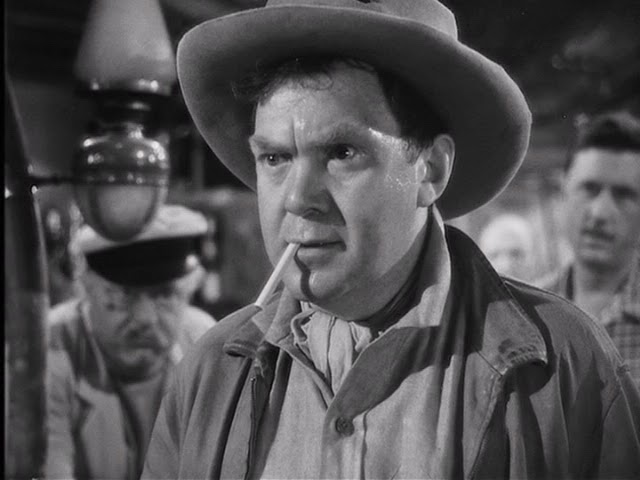
Only Angels Have Wings is a terrific example of Hawks’s abilities as a director. He’s able to take a basic plot and fill in the colorful characters that make us care. The story is set in Barranca in South America in the Andes. Jean Arthur plays Bonnie Lee who gets off a boat and meanders her way into meeting a few Americans. They all end up at the Bar. She finds out that some of these folks are pilots, who fly dangerous routes through the Andes to deliver and pick up mail. Cary Grant plays Geoff Carter, who is the manager of the group of pilots and a rather ace pilot himself. Bonnie and Geoff have a mutual attraction and she decides to hang around the post for awhile. Geoff and his friend Kid (Thomas Mitchell) have several wonderful scenes together talking piloting and life. A strange pilot arrives later in the film with some personal baggage and a wife (Rita Hayworth) who is Geoff’s ex-flame. It’s all a swirl of personal demons and triumphs, love affairs and misunderstandings, and some rather suspenseful events regarding flights over the Andes. What matters here, though, is the camaraderie and the dialogue.


There is terrific chemistry in the film from the ensemble cast. Everyone plays their part and each contributes essential pieces to the whole. Jean Arthur plays the plucky and resilient blonde, who sees right through Cary Grant’s character and challenges him to be a better person. Cary Grant plays the smart pilot, who’s been burned one too many times by flying and by women. Thomas Mitchell gives one of the finest performances of his career as Kid, an aging pilot with bad eyes. There’s a fantastic moment where he realizes he can’t see well enough to fly anymore. He stands facing away from Cary Grant, rubbing his cigarette on the edge of a cigarette tray for about 10 seconds, as he admits he can no longer fly. It’s a fantastically played scene by this veteran character actor. Richard Bartelmess strikes just the right note of mystery regarding his past. Rita Hayworth strains a bit in the emotional scenes, but does better in a moment where she’s drunk and Grant pours water over her head.


Hawks and Jules Furthman’s script is rich throughout. Each scene sparkles as you watch it and it’s a scene-to-scene kind of film. Every scene is whole and complete unto itself. You’re not necessarily waiting for some kind of pay-off or some big conclusion, but you simply revel in the joys of the moment throughout the running time. I think the best thing about the film is just watching the actors and listening to them. I could listen to these people talk all day and Hawks allows the actors time to interact. He doesn't rush anything and there is a relaxed vibe to the film, much like another great "hang-out" film of his, Rio Bravo (1959). Only Angels Have Wings is filled with plenty of chatting---moments where you really get to understand these people and that’s why this film works so well---because these characters are so well drawn. It’s hard to find any real flaws with the film. It’s one of Hawks’s best works and gets better with each viewing.

Wednesday, July 18, 2012

Way Down East (1920) - Directed by D.W. Griffith


If Griffith’s films come across as nearly perversely melodramatic, it’s because they are meant to be. Take Way Down East for example. The entire plot revolves around a woman who is taken through the wringer in an exploitative way. This is almost tortuous melodrama, stuff that quivers and vibrates with fragile broken-heartedness, deep melancholy, a bit of camp, and replete with the expectation that only through proper penitence and insult, can one rise above the fray. Griffith is clearly interested in deriving as much sympathy for his lead character as can possibly be garnered and then some. This film pleads for a deluge of pathos, and in fact earns it. Why? Two words......Lillian Gish. Griffith’s film works so well due to the ever present miraculousness of the luminescent Lillian Gish, who elevates what could be contrivance into a passion-play. With Gish at the forefront, she makes this film into an epic, near-biblical examination of persecution and saintliness. She makes this film essential viewing.


Based on a 1890’s Victorian stage melodrama, Griffith’s film is about a young woman named Anna (Gish), who is a rather poor country girl. She comes into contact with a rich playboy named Lennox (Lowell Sherman), who is attracted to Anna and who convinces her to enter into a secret tryst, convincing her to marry. But actually tricks her into a fake marriage. If that wasn’t ridiculous enough, she becomes pregnant and Lennox subsequently leaves her with nothing to her name. Even her young child dies and she’s left with only her bag as she walks a dirt road in the country. She manages to get hired by a man named Squire Bartlett, who lets her help out at his farmhouse, while she tries to keep her past a secret.


Hovering over the film is a rather heavyhanded but ultimately effective tone, which comes from several intertitles placed throughout. These reflect an Old Testament-like rigidity regarding the perspective of men and women, and an attempt to portray “Woman” as being the more highly evolved being. It’s all rather cloying when taken out of context. In this film though, it works to further the feeling the film is trying to invoke, which is a heightened emotional turmoil, and the fact this woman is up against all odds. Not only is Anna challenged by  the predatory sexual nature of “Man”, but she is also contrived against by all manner of self-righteousness……that of the film’s overarching narrative point of view, but also that of characters like Squire Bartlett, who throws Anna out in the snow once her past “sins” are revealed. For Anna, where is the forgiveness that can be provided her? Where is her shelter? Where is her comfort? I’m not saying that Griffith means anything harmful toward women in general or this Anna character. What I am saying, is that the film achieves a saintly transcendence through the perseverance that Anna must go through, almost in the way that Dreyer would convey spiritual purity in the face of evil in The Passion of Joan of Arc (1928).


Rising above the fray is Lillian Gish in one of her greatest roles. Somehow she manages to elevate what could be trite material into something magnetic and riveting. Here she is cast, perhaps even typecast, as a put-upon woman whom the audience must sympathize with. She reaches an angelic moment when she attempts to baptize her son as he is struggling for life. Her visual expression during this scene is quite something. What I love about Gish is her passion. She desperately sells herself to the camera in the most giving way. When the camera is in close-up on her face, she lets you in, without pretense or self-consciousness. She doesn’t play up for dramatic effect. She doesn’t give you falsity. She is absolute truth. Of course the climactic ice-floe sequence is justifiably famous and still plays well today. Through the use of editing, Griffith is able to give us the impression that Gish is flowing down the river on a chunk of ice toward her impending doom over the edge of the falls. It’s a brilliantly conceived and memorable finish to this silent masterpiece, which is a testament to effective melodrama and the lovely Lillian Gish.


Wednesday, July 11, 2012

Moonrise Kingdom (2012) - Directed by Wes Anderson


If Wes Anderson's last couple films (The Darjeeling Limited (2007) and The Fantastic Mr. Fox (2009)) seemed to me to show a decline is both quality and focus, it was with great anticipation that I went to see Moonrise Kingdom, hoping for a return to top form. I’ve been a follower and fan of Wes Anderson and his films since the late 90’s. What I love about his films, when he's at his best, is the juxtaposition of comedy and melancholy. Yes there is hilarity, but there is also truthful human nature. Rushmore (1998), and The Royal Tenenbaums (2001) are my two favorite Anderson works and probably straddle that line between comedy and melancholy the best. But it has been over a decade since those films and I was hoping for a return to that form with Moonrise Kingdom. I was not disappointed. 


Written by Anderson and Roman Coppola, Moonrise Kingdom is the story of Sam (Jared Gilman) and Suzy (Kara Hayward), two 12-year olds who have fallen in love. Sam is a Khaki scout at a camp on an island off of New England and Suzy lives on the far end of the island and the year is 1965. They met one year prior at a performance of Noye’s Fludde, an opera based upon the story of Noah’s ark. They planned all year long to run away and spend time camping together in their own “Eden”. Sam runs away from his camp and Suzy runs away from home to meet up together. We follow Sam and Suzy as they innocently go through the rites and rituals of love and friendship. Meanwhile,  everyone else is on a hunt for the two lovers on the lam---Sam’s camp counselor (Ed Norton), the local sheriff (Bruce Willis), Suzy’s parents (Bill Murray and Frances McDormand), among others.


There are times in this film where the sheer density and weight of the content onscreen is so thoroughly overwhelming that you literally struggle to absorb everything being shown to you. This is not a knock on Anderson, but a tribute to his abilities as a director in being able to so thoroughly control his design. Wes Anderson is a director who tells a story through several mediums, often at the same time. His symmetrical compositions and framing seem to speak to some need to find order within the everyday, and Robert Yeoman's cinematography captures Anderson's vision perfectly. His characters speak without inflection…but instead reflect archetypes in their uniform, accessories and manner that convey affectation, motivation, and emotion. Anderson parallels music (and the music is an entire discussion unto itself in this film and rather dense with significance) and related performances (the Noye’s Fludde), or narration that furthers character development or our understanding of the characters, rather than strict dialogue progression. Thus in watching this film, one must be cognizant of the fact that Anderson’s mode of storytelling often comes from oblique angles, rather than straight ahead, and often from several directions at once. Trying to think back upon this fast-paced film is rather daunting and would likely reward multiple viewings as does Anderson’s best work.


The performances of the two young leads...Jared Gilman and Kara Hayward are unpolished and rather touching. They capture the feeling of being 12 in all its confusion and embarrassment. Bruce Willis may give the best performance in the film as the sheriff, a rather resigned and weary man with some past hurts and regrets. He surprised me here with how effective he was. Bill Murray, Frances McDormand and Edward Norton are uniformly perfect, as is Jason Schwartzmann who has a hilarious cameo as the camp parson. Robert Yeoman's camerawork is magnificent. Shot in 16mm, the compositions are faded and slightly less crisp, providing a hazy, distanced quality to the whole film. Additionally, some hand held shots in the woods are a welcome addition to Anderson’s normally non-improvisational visual storytelling.


This is a film about depressed people. Although I wouldn't call it a dark film, these characters certainly have issues. Sam is an orphan whose foster parents no longer want him; Suzy has a violent streak and cannot connect with her parents; Suzy’s mom is having an affair; Suzy’s dad is apathetic; the camp counselor is caught between careers and his perfectionism does not allow for mistakes, but instead allows for eternal dissatisfaction. Yes Anderson wants us to laugh, but as in most of Anderson's films, there is always a desperate need to find solace. I always find his films to be far more emotionally involving than it appears that they should be, considering the somewhat whimsical visual approach and the comedy. 


There is a question one could pose about the film and that is whether we are supposed to take Sam’s and Suzy’s relationship seriously. Are we supposed to laugh at them? Or are we laughing with them? Or are we supposed to view them with fondness and sincerity? It is of my opinion that the film treats their relationship with a good deal of sincerity. This relationship they share is their world and that’s all they know. They know what is here and now and no one else can talk them out of it. Don’t get me wrong…their story is funny and amusing and rather sweet. But, when he wrote this story, Anderson was inspired by the time in his life when he fell in love at the age of 11.  Do we not hold our first crushes in some sort of reverential manner? Were the feelings at that age not intense and sincere? Yes we’re awkward at age 12….but do we ever become less awkward toward love? We might appear smoother as we get older, but falling in love can reduce people to being 12 years old all over again. This film captures that feeling……of discovery, of feelings previously unknown, and the joy of finding solace in the comfort of another. 

Wednesday, July 4, 2012

Orphans of the Storm (1921) - Directed by D.W. Griffith


Orphans of the Storm is one of my favorite D.W. Griffith films. Sure, he made bigger/ more influential movies prior to this, but there’s something just so charming and beguiling about this magnificent and epic melodrama. Griffith was always at his best when he let the melodrama flow unheeded, like in Broken Blossoms (1919), another brilliant example from this era. Here the overt, unabashed emotion is propelled beyond self-consciousness into a near obsessive meditation on cliffhangers, impossibility and outrageousness. Perhaps also, it’s just the presence of Lillian and Dorothy Gish that makes this film sing for me. These two sisters are just so wonderful in this film and their star power makes this an essential example of talent sometimes being the reason for the lasting impact of a film. I’m not so sure this film is half as good without their presence.


Orphans of the Storm regards 2 orphans who are found and raised by a family in France around the time of the French revolution. They grow up together as caring and loving sisters. Louise (Dorothy Gish) goes blind at a young age and Henriette (Lillian Gish) decides to take great care of her. They are literally bound to each other. Louise doesn’t use a cane to get around and instead, in a deeply melodramatic touch, she uses her arms to feel about her, leading to some rather desperate moments later in the film. The two sisters are separated in Paris, when Henriette is kidnapped by some party-goers and Louise is left to fend for herself. Louise is picked up by a street gypsy who takes her back to her home and forces her into being a street beggar. Both sisters remain separated for some time. Henriette is thrown into the midst of French Revolution politics and scandal and winds up on the chopping block at the end of the film, through which comes an opportunity for the sisters to be reunited at the end in a great flourish of cliffhangers.


Griffith certainly could never be mistaken for an understated director. It’s quite clear that he has a keen eye for spectacle filmmaking and great setpieces. During the sequence in which Louise is kidnapped by the gypsy and thrown into the pit, we are not surprised by the fact that rats come crawling around her as she blindly feels about her surroundings, but it’s certainly a brilliantly devious dramatic effect. There’s a moment when Henriette in her house on the top floor above the street, hears someone singing on the street and thinks it’s Louise. She rushes to the balcony, and seeing her sister calls out to her and reaches her hands down below as they can almost taste the fact they will be reunited. But during the dramatic delay of calling out to each other, the gypsy woman appears and soldiers interrupt Henriette’s determination to get to the street. It’s purely agonizing to watch, but it’s a fantastically edited sequence which builds suspense. Of course the final third of the film contains many large battle and crowd sequences, something which Griffith was very adept at scaling to size. I also just love the way that Henriette, while being prepped for her beheading, is on the block for an interminable amount of time, suspense building while we’re most certainly anticipating the guillotine coming down.


What I love best about this film is Lillian and Dorothy Gish, whose chemistry and star power is absolutely what makes this film so watchable for me today. Dorothy Gish was a fine actress in her own right here with her long dark hair and rather childlike face. She's a bit unpolished when compared to Lillian, but she manages to pull-off her role. It’s Lillian Gish who is absolutely a knock-out here. She has a way of just BEING in front of the camera and giving you everything you need to know. There is a particular pose where she has this way of cocking her head to one side and looking so sad. In fact, when she cries on camera (which she does a lot in this film), she has a way of CRYING, as if it’s the primordial expression of feminine catharsis...... as if she is the beginning and the end of cinematic weeping. I don't even think Garbo was as good at crying on camera as Lillian Gish. Her expressive eyes, lips and angelic face keep me riveted to the screen. She is one of the essential silent film faces and her gift for acting is so glorious that it makes this film unforgettable. 

Sunday, June 24, 2012

Dodsworth (1936) - Directed by William Wyler


(Note: This post is in support of the William Wyler Blogathon which is being hosted by The Movie Projector, from June 24-29, where you can find more info and links to other reviews of William Wyler films.)


William Wyler’s masterful Dodsworth is the kind of film that even today rings so truthful. I find it is hard to find films from the 1930’s that reflect observant, realistic portrayals of marriage. Perhaps something like Vigo’s L’Atalante (1934) would be the best contemporary from the era that broaches the subject of marriage with an observant eye. But there’s something so down to earth and devastating about Dodsworth. It’s not trying to be stylized or poetic (like Vigo’s film), or funny (like McCarey’s The Awful Truth). It just patiently observes marital interaction and tendencies, allowing the divide between the male and female to open up before us. There are no easy answers that this film provides for us and THAT is part of what makes the film resonate so well.


Dodsworth stars Walter Huston as Sam Dodsworth, head of a car manufacturing company who is retiring from his position. His post-retirement ambitions include traveling and seeing the world with his wife of 20 years. We follow Dodsworth and his wife Fran (Ruth Chatterton) as they travel by boat and begin to meet people who start to alter the course of their happiness. On the boat, Dodsworth meets a woman named Edith (Mary Astor) who without pretense appreciates Dodsworth’s curiosity and hunger for adventure. That same night, his wife Fran meets a man with whom she flirts and kisses. Feeling shame, she cries openly in front of her husband and admits her wrongs. Dodsworth is curiously not worked up about the event. Does he trust her too much? Does he not care? It’s hard to say for sure. He seems to love his wife, but he is also resigned to the fact that she is her own woman. She is obviously flaunting conventions by hanging around with other men and dancing away her evenings and she uses her husband’s trust as a cloak to engage in risky flirting. Soon, though, she flirts beyond her ability to relinquish it and invites a marriage proposal from a Viennese man. The devastating denouement of the film, involving Sam and Fran's separation and a potential reconciliation is handled so truthfully and compassionately, as Dodsworth prepares to move on from his wife by finding solace and companionship in the arms of Edith.


Walter Huston gives one of, if not his best performance of his career as Dodsworth. I am quite partial to his crotchety prospector role in The Treasure of the Sierra Madre (1948). But in Dodsworth, Huston’s understated performance is so good because he allows us a chance to question his behavior. He does not paint Dodsworth into a corner using broad strokes. He uses smaller facial expressions, changes in tone and dialogue to make us believe he is a complicated man. Perhaps a man that is a bit naïve? Perhaps a man that is blinded by high expectations of himself and his family status? Perhaps he’s a man with secret yearnings never expressed to his wife for fear that he would rock the boat? All of these and none of these may be correct about him. It’s such a well written role and brilliantly acted part that we enjoy the process of following Dodsworth on his path to self-discovery. Ruth Chatterton and Mary Astor also give particularly fine turns in this extremely well-acted film.


Yes the film takes some melodramatic turns (and I’m the biggest melodrama fan there is), but Wyler’s assured direction and ability to let a scene play out, perhaps longer than other directors of this era, allows the film to develop a lived-in feel, creating not a bubble of stylized emotions but a realistic examination of people. Wyler seems to find not just the cinematic truth of the moment, but also the underlying human nature behind the moment. It’s not hard to envision how Wyler’s work here connects us to later decades where the likes of Bergman (Scenes From a Marriage), or Cassavetes (A Woman Under the Influence) would take us to more harrowing places. There’s something about Dodsworth though, that is devastating in its own right. As Dodsworth and Edith tentatively realize that they are developing significant feelings for each other, there’s a scene where she realizes that he is going to get a call from his wife. She’s so fearful that he will pick up that phone and that he will be lured back to his old life that she tries to do everything she can to get him away from earshot of that phone. Her failed resignation when she realizes she may lose Dodsworth exemplifies this film's ability to project emotion and create drama through understanding human nature, through understanding people and the way we operate. Dodsworth is the era-defining masterpiece that examines marital discord in the 1930’s. It is still vital today and remains perhaps Wyler’s greatest film.